The free time of the French has increased by several dozen minutes per day between the years 1980 and 2010, according to data from CRÉDOC. This increase has not only inflated the duration of evenings spent in front of a screen: it has redistributed leisure practices towards more active, varied, and sometimes hybrid forms of relaxation and learning. The offer has adapted, but actual usage does not always follow the announced trends.
Proximity Micro-adventure: An Escape Leisure Turned Sustainable Reflex
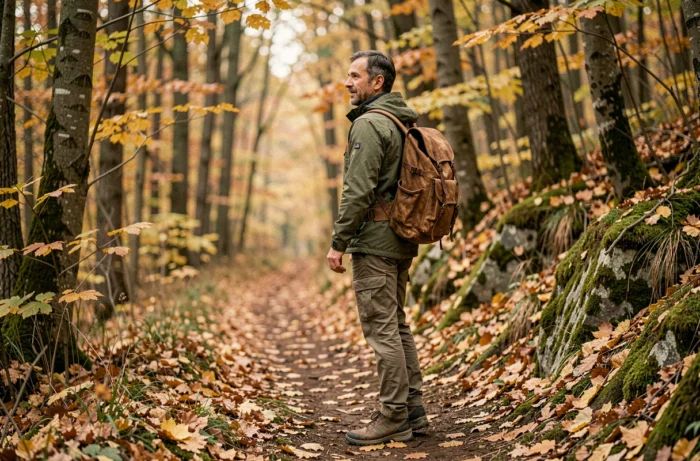
Among the leisure activities that have structured themselves after the health crisis, micro-adventure holds a special place. It is not just a simple Sunday stroll: the practice involves a short getaway close to home, designed to produce a real feeling of escape without heavy logistics or long journeys.
A specialized article published in August 2026 notes that micro-adventure is gaining ground in 2026, driven by the desire for disconnection and budget management. The Responsible Tourism Observatory and the General Directorate of Enterprises are cited as observing that this movement, initiated during the pandemic, has transformed into a sustainable reflex rather than a constraint.
The possible formats are numerous: camping less than an hour from home, night hiking, exploring waterways by canoe for half a day. The common point remains the break from daily routine, without mobilizing a vacation budget. Online gaming enthusiasts also find their dose of escape in other ways, and it is possible to learn everything about the Monopoly Go moguls club for those seeking entertainment accessible from their couch.
Field feedback diverges on one point: does micro-adventure work as well in dense urban areas as in rural outskirts? Testimonials published on specialized blogs suggest that access to nearby natural spaces strongly conditions the quality of the experience.
Creative and Manual Activities: What Regular Practice Changes
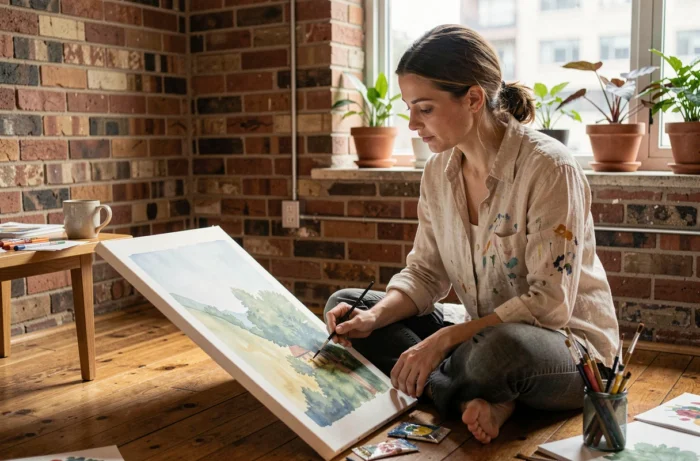
Creative hobbies (drawing, pottery, sewing, writing) appear on all lists of recommended activities. However, the gap between initial enthusiasm and the regularity needed for the activity to have a real effect on well-being remains a blind spot in these recommendations.
A creative activity practiced less than once a week loses most of its decompressing effect. Local cultural associations notice this: one-off workshops attract many people, but year-long registrations struggle to maintain after the first quarter. The problem is not a lack of interest, but the difficulty of securing a recurring time slot.
To transform a creative hobby into a true tool for daily escape, several elements matter:
- A dedicated space, even minimal (a reserved corner of the table avoids the friction of having to set everything up again for each session)
- A short format compatible with daily constraints (20 to 30 minutes is enough for a sketch, a page of writing, or a row of knitting)
- A light social framework, such as an online group or a monthly workshop, that maintains motivation without performance pressure
Rejuvenation Retreats: A Changing Market
Wellness retreats in nature are no longer reserved for a niche audience. The market has expanded to a much broader clientele than just yoga or meditation enthusiasts. Stays combining walking, silence, and workshops reconnecting with nature are multiplying, driven by both independent structures and traditional hosts adding this offer to their catalog.
This evolution raises a fundamental question about the boundary between leisure and care. Some retreats incorporate practices supervised by health professionals (sophrology, naturopathy), while others remain purely recreational. The absence of a clear regulatory framework makes it difficult for consumers to understand.
What Distinguishes a Useful Retreat from a Marketing Weekend
The content of the program matters more than the destination. A stay structured around periods of silence, long walks, and shared meals without screens produces measurable effects on sleep quality in the following days. In contrast, packages overloaded with back-to-back activities (workshop-conference-yoga-massage over 48 hours) reproduce the rhythm of daily life under another guise.
Digital Leisure and Online Games: An Underestimated Daily Entertainment
Streaming music remains the most widespread leisure activity in France: the vast majority of the population listens to it very regularly, according to Statista data. Video games and mobile games follow closely behind, with a practice that has become commonplace well beyond the adolescent audience.
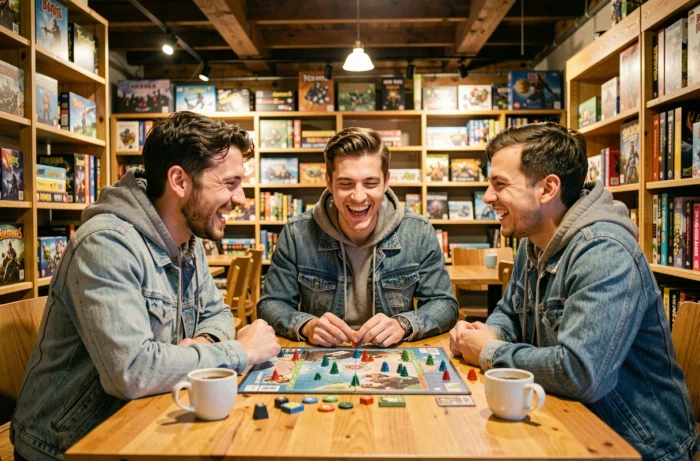
Digital entertainment suffers from an ambiguous perception. Perceived as passive, it can nonetheless mobilize significant strategic, social, or narrative skills. Management, strategy, or online role-playing games create sustainable communities and structure free time just as much as a weekly team sport.
The limit lies in the duration of the sessions. Available data do not allow for a universal threshold beyond which digital leisure tips into excess, but feedback converges on one point: diversifying activities protects better than restricting to a single type of leisure.
Sports and Social Outings: Two Pillars That Lists Forget to Connect
Competing articles treat sports and outings with friends as two separate categories. In practice, activities that combine physical effort and social connection (group hiking, amateur team sports, dance classes) produce a more pronounced escape effect than each of these components isolated.
Local sports associations often offer free or symbolically priced discovery slots. Their main drawback remains the rigidity of schedules, which is not very compatible with fragmented timetables.
- Outdoor sports in groups (trail running, cycling, indoor climbing) combine physical expenditure, socialization, and a change of scenery
- Group classes indoors (fitness, martial arts, dance) provide a regular framework without depending on the weather
- Active cultural outings (guided walking tours, workshops in museums) combine learning and movement
The leisure activity that best helps to disconnect in daily life is often the simplest to set up. It is the one that integrates into a routine without excessive logistical effort, varies enough to avoid monotony, and leaves a trace the next day, even minimal, in the form of a skill acquired, a social bond strengthened, or simply a deeper night’s sleep.