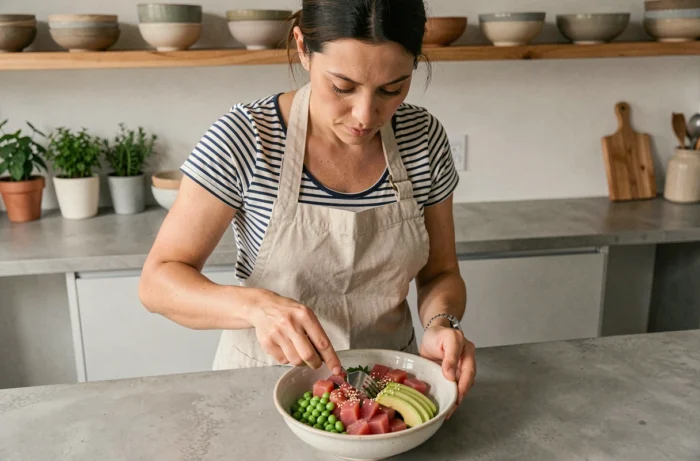
A culinary style, in the strict sense, refers to a coherent set of techniques, ingredients, and principles that guide everyday cooking. In France, domestic practices do not follow a single guideline: they oscillate between a foundation of classic recipes and more recent influences driven by social media, budget constraints, and a growing focus on health.
Functional cooking during the week, pleasure cooking on the weekend: a dual rhythm that structures our habits
Talking about trendy culinary styles first requires understanding how the French organize their meals. A study by GECO Food Service, conducted with Ifop, highlights a phenomenon rarely addressed by articles focused on restaurant gastronomy: habits vary according to profile and the day of the week.
During the week, cooking is primarily functional. Available time, budget, and practicality dictate choices. Pasta, fried rice, reheated dishes, quick composed salads: the register remains utilitarian.
On the weekend, the focus shifts towards pleasure and sharing. The gratin dish comes out, a recipe spotted online is attempted, invitations are made. This alternation creates two distinct culinary registers within the same person, which explains why several trends coexist without any truly dominating. As detailed by culinary trends on Chapeau Melon, this diversity reflects increasingly fragmented lifestyles.
Classic French recipes: a foundation that trends do not displace
Roast chicken, pasta, pizza, fries: these recipes continue to hold a central place in French households, according to the same study. This observation may be surprising in light of the media coverage of world cuisines and specialized diets, but it reflects a simple reality.
The classic repertoire endures because it meets the four daily trade-offs: accessible price, short preparation time, guaranteed pleasure, acceptance by all household members. A Sunday roast chicken checks all four boxes effortlessly.
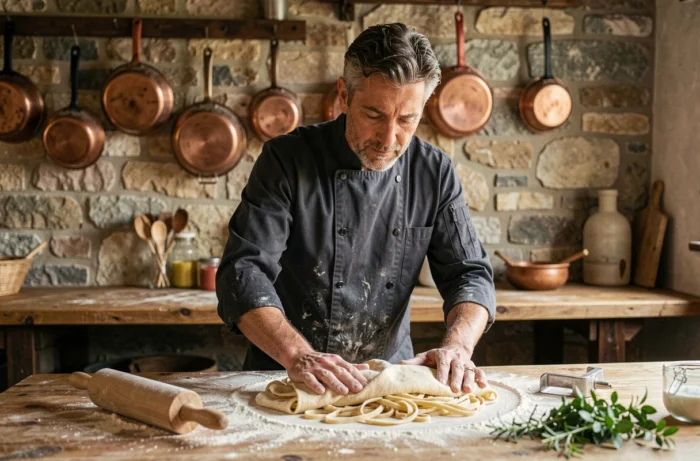
This foundation is not fixed, however. Versions evolve: chicken is marinated with Asian-inspired spices, pasta incorporates miso or cashew cream, pizza uses long-fermented sourdough. The classic style absorbs influences without losing its structure.
Plant-based cooking in daily life: beyond a diet, a style in its own right
The rise of plant-based eating in France is no longer limited to those who identify as vegetarian or vegan. It now constitutes a standalone culinary style, with its own techniques and reference products.
Several elements distinguish this trend:
- The use of varied plant proteins (legumes, tofu, tempeh, seitan) as the base of the dish, rather than as a mere accompaniment to meat.
- The application of fermentation and transformation techniques that add flavor and texture without animal products: fermented plant milks, aged cashew cheeses, broths made from dried mushrooms.
- The adaptation of classic French recipes into plant-based versions, such as pâtés en croûte or gratins, which maintain the structure of the original dish while altering its ingredients.
This style is also appealing because it fits into a logic of gradual reduction rather than radical break. Many households alternate meals with and without meat throughout the week, without claiming a specific dietary label.
International influences in home cooking: how flavors travel
World cuisines are not new in French households, but their penetration is changing in nature. It is no longer just about ordering a Thai dish or preparing couscous: certain foreign techniques and ingredients are now firmly established in the pantry.
Miso, gochujang, and artisanal fermented soy sauce are no longer reserved for specialty stores. They can be found in supermarkets and are used to season dishes that are neither Japanese nor Korean. A vegetable gratin seasoned with white miso, a gochujang vinaigrette on a lentil salad: these hybridizations have become common.
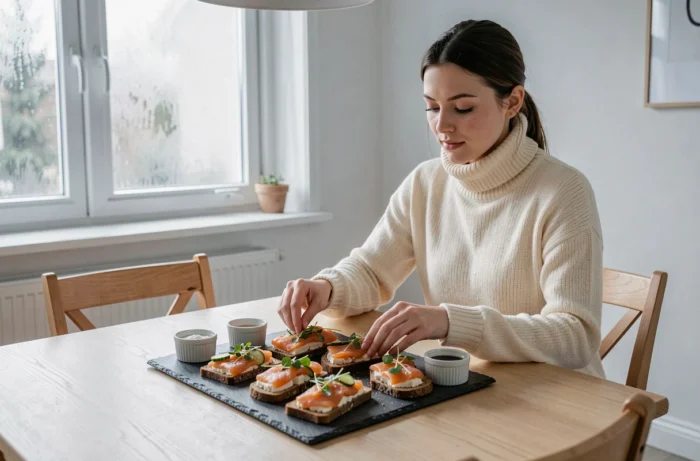
Greek cuisine has also gained visibility in recent years in France, driven by simple products (feta, yogurt, olive oil, fresh herbs) and a Mediterranean philosophy that aligns with current health concerns.
What characterizes this movement is that it does not replicate original dishes exactly. Home cooks borrow condiments and methods, not complete menus. The result is a hybrid style, difficult to name, but very present in actual practices.
Social media and AI: the new influencers of culinary styles
The GECO-Ifop study notes a marked generational phenomenon: social media and artificial intelligence are becoming sources of culinary inspiration, particularly among young adults. TikTok, Instagram, and AI recipe suggestion tools are changing how a culinary style spreads.
A video format of less than a minute can popularize a technique (smash burger, vodka pasta, dalgona coffee) within weeks. This speed of propagation favors visually spectacular and technically accessible recipes.
The downside is a rapid turnover: some culinary trends appear and disappear within months without leaving a lasting mark on habits. The styles that truly take hold are those that, beyond the visual appeal, meet a concrete need for taste, practicality, or budget.
The majority of French people report needing to monitor their food budget while considering the pleasure of eating as a priority. This tension between constraint and hedonism remains the most reliable filter for understanding which culinary styles endure beyond a season of likes.