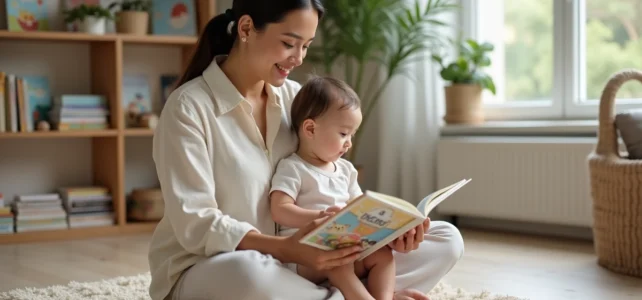
The additional birth leave, effective from July 1, 2026, reshuffles the cards of family organization from the very first weeks. Understanding its compensation mechanisms, articulating existing support systems, and structuring daily life around child development are three axes that condition a serene parenthood over time.
Additional Birth Leave 2026: Compensation Modalities and Impact on Parental Organization
The PLFSS 2026, definitively adopted on December 16, 2025, created a one or two-month additional birth leave compensated after the end of maternity, paternity, or adoption leave. This provision applies to children born or adopted from January 1, 2026, including those whose birth was scheduled for that date but occurred earlier.
The compensation is based on the salary of the last three months: 70% of the salary in the first month, 60% in the second. This scale directly addresses the financial barrier that limited the uptake of parental leave, particularly among fathers. Couples can now accumulate up to four months of joint parental presence.
We recommend planning this leave in coordination with the employer as early as the sixth month of pregnancy. Anticipation allows for negotiating a job adjustment upon return and avoids tensions regarding service continuity. Parents wishing to deepen their preparation will find useful information on Happy Maman to structure this period.

Screen Regulation and Child Cognitive Development: Operational Guidelines
Managing digital use in the home is not just about setting a daily screen time. The determining factor is the type of interaction that the screen generates for the child, not just the duration of exposure.
Passive content (looped videos, autoplay) engages very different attention circuits compared to an interactive application where the child manipulates, responds, and chooses. Before the age of three, we observe that passivity in front of the screen correlates with language delays, while parent-supported use (naming what appears, asking questions) maintains verbal exchange.
Three Criteria for Evaluating Digital Content for Young Children
- Does the content impose breaks, or does it allow the child to scroll indefinitely? A design that slows down passive consumption better protects attention.
- Can the child interact (touch, respond, build), or is he/she just a spectator? Interactivity maintains active cognitive engagement.
- Can the parent co-use the application without getting bored? If the content is designed solely to occupy the child alone, it replaces parental interaction instead of complementing it.
Setting a coherent digital framework also involves parents examining their own usage. A child who sees their parents checking their phone during meals internalizes this norm as acceptable, regardless of the discourse held otherwise.
Parenting Support: Mapping Local Systems Often Underused
Child-parent reception places (LAEP), listening networks, and family houses exist in most medium-sized municipalities, but their attendance remains low compared to identified needs. The issue is not the supply; it is the clarity of the access pathway.
CAF and PMI remain the two most reliable entry points for identifying structures suited to a given situation. Local parenting support associations often offer thematic discussion groups (baby sleep, emotion management, return to work) led by trained professionals.
What These Systems Provide in Practice
A discussion group is not a parenting course. Its primary function is to reduce parents’ decision-making isolation in the face of situations without a single answer: persistent sleep disturbances, systematic opposition, separation anxiety upon entering a group setting.
The early intervention of a early childhood professional (psychomotor therapist, psychologist, pediatric nurse) on a specific point often prevents the establishment of dysfunctional patterns. Waiting for difficulty to become a declared problem prolongs the care pathway and increases the mental load of the household.

Parents’ Mental Health: A Blind Spot in Perinatal Support
Postpartum depression affects both parents, not just the mother. Signs in the father or co-parent often go unnoticed because postpartum follow-up focuses on the mother-child dyad.
The early postpartum interview, feasible from the fourth week, is the most suitable moment to screen for parental distress. This interview with a midwife or doctor allows for addressing the emotional state of the couple without reducing it to the medical follow-up of the infant.
We observe that parents who verbalize their difficulties within the first six weeks access appropriate support more quickly. The taboo surrounding parental ambivalence (loving one’s child while struggling with the period) delays the request for help by several months in many households.
Managing Children’s Emotions: Beyond Positive Parenting
Positive parenting is often reduced to a catalog of stock phrases (“I understand that you are angry”). This simplification creates a dissonance between the benevolent discourse and the parent’s real exhaustion.
Supporting a child’s emotions first requires recognizing one’s own. A parent overwhelmed by fatigue or frustration cannot effectively co-regulate their child’s emotions. The priority is to secure one’s own state before seeking to contain that of the child.
Co-regulation works through three concrete levers: calm physical presence (proximity without words), validation of the emotion without immediately trying to resolve it, and offering a behavioral alternative once the emotional load has decreased. Applying these three steps in order avoids the trap of verbal reasoning in the face of a child in full crisis, who temporarily no longer has access to their higher cognitive functions.
Serene parenting does not rely on a single model. It is built through the articulation of concrete provisions (birth leave, local support structures, postpartum follow-up) and by being aware of one’s own limits. The best-equipped parent is the one who knows the precise moment they need help and knows the way to access it.