Among the plants cultivated in France, those whose names start with the letter K remain underrepresented in garden center catalogs. Their diversity is, however, real: fruit trees, perennial plants, ornamental shrubs, and houseplants cover very different needs in terms of exposure, soil, and hardiness. Comparing these species based on measurable criteria allows for informed choices.
Hardiness, exposure, and soil: comparative table of ten K species
Before planting, three parameters filter out nearly all failures: the minimum temperature tolerated, the light requirement, and the type of soil. The table below gathers ten species available in nurseries or garden centers, ranked by decreasing hardiness.
| Species | Type | Hardiness | Exposure | Soil |
|---|---|---|---|---|
| Kalmia latifolia | Shrub | Very hardy | Partial shade | Acidic, cool |
| Kerria japonica | Shrub | Very hardy | Shade to partial shade | Ordinary, drained |
| Knautia macedonica | Perennial | Very hardy | Sun | Drained, limestone tolerated |
| Kniphofia | Perennial | Hardy | Full sun | Well-drained |
| Kaki (Diospyros kaki) | Fruit tree | Hardy | Sun | Deep, cool |
| Kolkwitzia amabilis | Shrub | Very hardy | Sun to partial shade | Ordinary |
| Kalimeris | Perennial | Very hardy | Sun to partial shade | Cool, drained |
| Kalanchoë | Houseplant | Frost-sensitive | Bright light | Light substrate |
| Kalmia angustifolia | Shrub | Very hardy | Partial shade | Acidic, moist |
| Kageneckia oblonga | Shrub | Less hardy | Sun | Drained, dry |
Several lessons emerge. The majority of these species tolerate harsh winters, making them cultivable in a large part of metropolitan France. In contrast, Kalanchoë and Kageneckia are reserved for pot cultivation or gardens along the Mediterranean coast.
Among the flowers and trees starting with K, it is Kalmia latifolia and Kerria japonica that offer the best tolerance to shade, a criterion often decisive for north-facing urban gardens.
Kalmia latifolia and Kerria japonica: two shrubs for shaded gardens
These two shrubs share high hardiness and shade tolerance, but their soil requirements differ significantly.
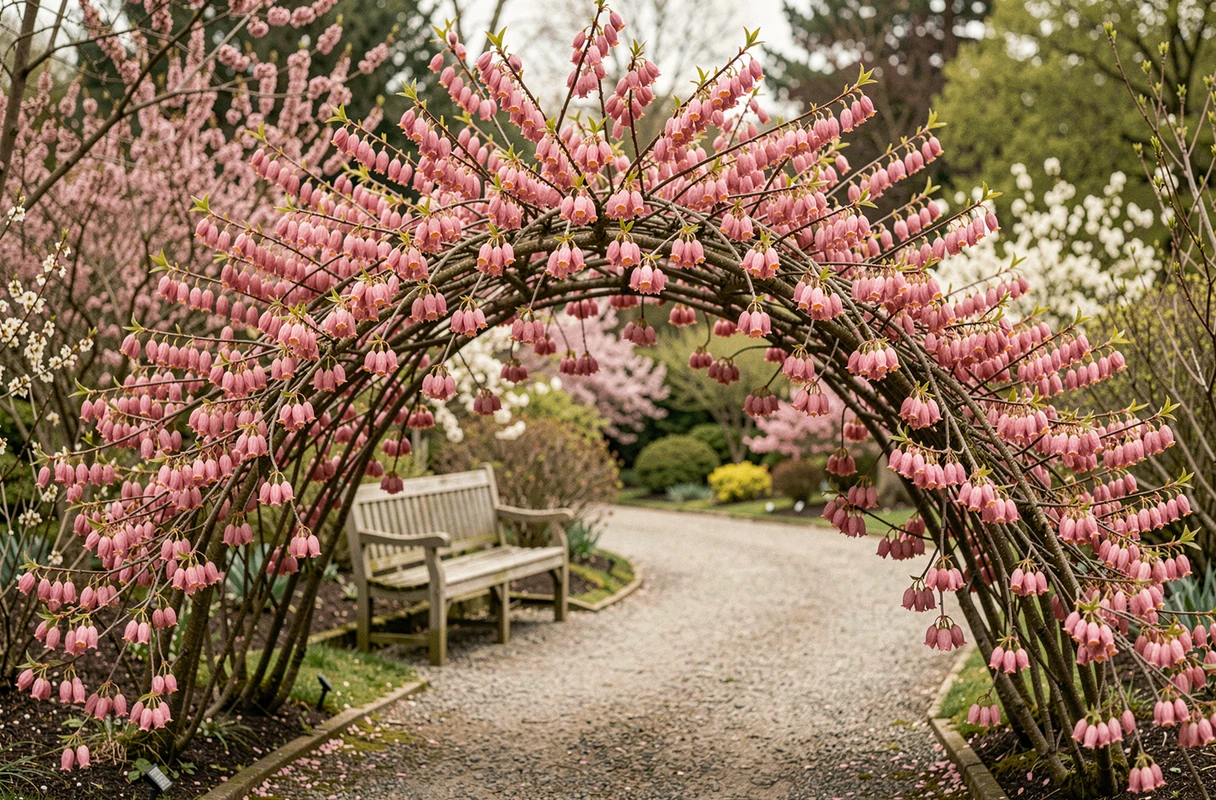
Kalmia latifolia requires an acidic soil, similar to that of rhododendrons and azaleas. In limestone soil, its leaves yellow within a few months. Its cup-shaped pink flowers appear in spring and last for several weeks. Its mature height often exceeds two meters, making it a suitable background plant.
Kerria japonica, on the other hand, adapts to ordinary soils, including slightly calcareous ones. Its bright yellow flowers, either single or double depending on the variety, brighten shaded areas from April. Pruning after flowering is sufficient to keep it contained. Kerria tolerates poor soils that most shrubs reject.
These two species do not compete with each other: they respond to opposite soil pH levels. A pH test before planting helps avoid losing a season.
Kniphofia and Knautia: sun-loving perennials for dry borders
South-facing borders with well-drained soil host few spectacular perennials. Kniphofia and Knautia macedonica fill this gap with very different silhouettes.
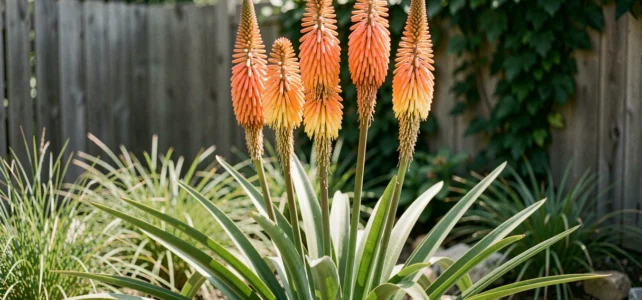
Kniphofia produces vertical spikes in orange, red, or yellow tones depending on the cultivars. Its flowering extends from summer to autumn. A waterlogged soil in winter destroys its fleshy roots: drainage with gravel during planting remains the most reliable precaution.
Knautia macedonica, more discreet in height, offers deep red flowers on fine stems. It self-seeds spontaneously in calcareous, dry soil. Its basal foliage remains green late into autumn.
- Kniphofia is suitable for gravel gardens and terrace borders, where its graphic form stands out sharply.
- Knautia integrates well into flowering meadows and naturalistic borders, where it attracts many pollinators.
- Both species can withstand several weeks without watering once established, making them suitable for increasingly hot summers.
Kaki in temperate climates: an underestimated fruit tree
The Japanese persimmon (Diospyros kaki) is still rarely planted in French gardens, even though its hardiness allows it to withstand the winters of the southern half of the country and several areas of the Paris basin.
The kaki produces its fruits in autumn, after the leaves have fallen. This peculiarity gives it a striking ornamental silhouette: bright orange fruits hanging on bare branches. Non-astringent varieties, such as ‘Fuyu’, can be eaten firm, without waiting for them to soften.
Its ideal soil is deep and cool, but well-drained. In heavy or waterlogged soil in winter, the roots suffer. A surface application of compost each spring and a thick mulch are sufficient for its maintenance.
Recent heatwaves have prompted managers of heritage gardens to incorporate trees that are more resilient to water stress. The kaki, native to subtropical areas, meets this criterion better than most classic European fruit trees.
Kalanchoë indoors: long flowering and minimal care
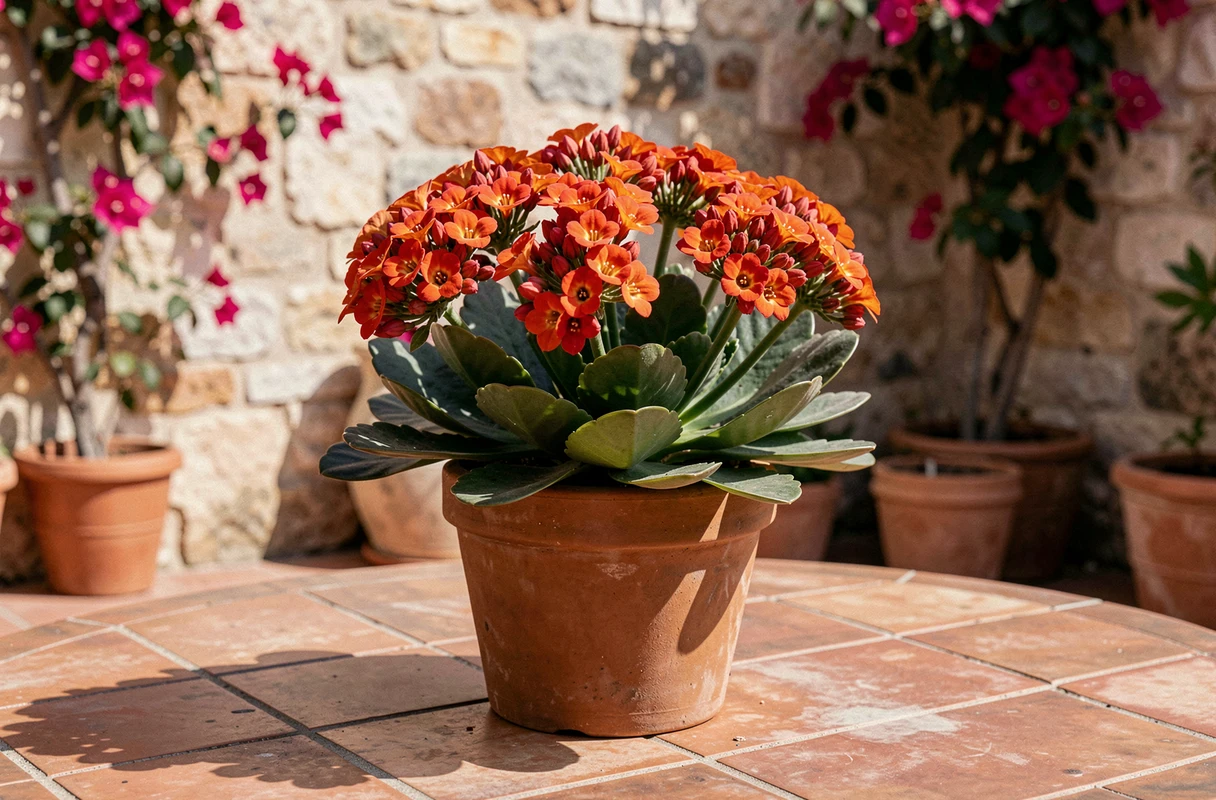
Kalanchoë is the only frost-sensitive species in this selection, but it is also the one that offers the longest flowering indoors, often for several consecutive months. Its flowers come in red, pink, orange, yellow, or white.
Its substrate must be light and draining. Overwatering causes rapid root rot. Watering every two weeks in winter and weekly in summer meets its needs.
- Place the pot near a window facing east or west for bright light without burning direct sunlight.
- To restart flowering after the first wave, reduce the daily light duration for six weeks (short days).
- Kalanchoë tolerates the dry air of heated interiors, which distinguishes it from most tropical plants.
The choice among these ten species is based on three simple data: soil pH, available sunlight, and the minimum winter temperature of your area. A soil test and an exposure survey alone eliminate half of the planting errors. The most versatile species in the table, Kerria and Kolkwitzia, remain the safest entry point for gardeners starting with the letter K.